
Seasonal Wedding Flowers: Designing for the Beautiful In-Between
There's a moment every year when summer hasn't completely left, but fall has clearly begun.
Gardens are still producing flowers. Trees haven't fully changed, yet the first yellow leaves have started appearing. Grasses become golden around the edges, evenings arrive a little earlier, and the light takes on a softness that wasn't there a few weeks before.
For wedding floral design, this in-between season can be one of the most interesting times of the year.
September and October weddings don't have to choose between lush summer flowers and traditional fall wedding florals. Some of the most beautiful seasonal wedding flowers come from allowing those two worlds to overlap.
Fresh blooms can sit beside changing foliage. Soft colors can be grounded with dried grasses, berries, or deeper seasonal tones. An arrangement can still feel abundant while showing the first signs of a landscape beginning to slow down.
Rather than forcing a wedding into one seasonal category, we can design for the exact moment in which it's happening.
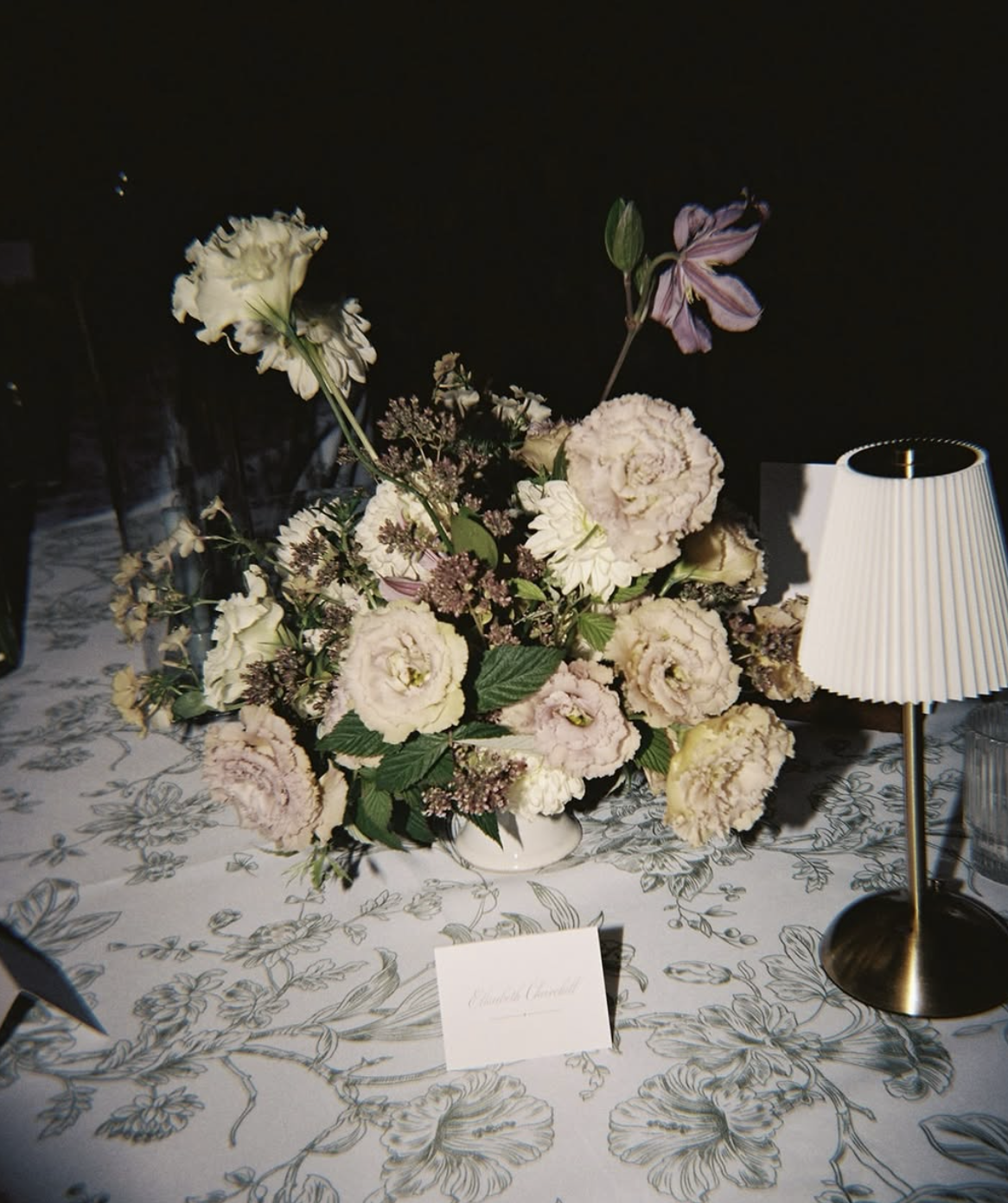
Photo Credits: @jacquelinebenetphoto
What Does It Mean to Choose Seasonal Wedding Flowers?
Seasonal wedding flowers are often described in practical terms.
Which flowers are available in September? What's blooming in October? Can I get peonies for a fall wedding?
Those are important questions, but designing seasonally goes beyond flower availability.
It's also about paying attention to the landscape, light, textures, and natural materials surrounding your wedding.
A truly seasonal floral design feels connected to its time and place.
Seasonality Is More Than a Flower List
You can use flowers that are technically available in autumn and still create a design that doesn't feel particularly connected to fall.
On the other hand, a floral arrangement filled with cream, pale pink, and soft green might feel perfectly seasonal when it includes late-season garden flowers, changing foliage, seed heads, berries, or grasses.
That's because we experience seasons through more than color.
We notice the way landscapes change, how plants move through different stages of growth, and the shift in light as days become shorter.
Those details give seasonal wedding floral design its depth.
September Wedding Flowers Live Between Two Seasons
September is particularly interesting because it refuses to fit neatly into one category.
Depending on the year and location, early September can still feel very much like summer. Gardens remain abundant, temperatures are warm, and landscapes may still be predominantly green.
By the end of the month, small signs of fall begin appearing everywhere.
That overlap creates enormous freedom when designing September wedding flowers.
Hold Onto the Abundance of Summer
Getting married in early fall doesn't mean you need to immediately abandon lush garden flowers.
Late-summer blooms can bring color, movement, and abundance into a September wedding. Rather than trying to make them look overtly autumnal, they can be paired with subtle hints of what's beginning to happen outside.
A few deeper tones may enter the palette. Grasses can introduce golden texture, while berries or changing foliage bring small moments of the approaching season.
The shift doesn't have to be dramatic.
That's what makes it beautiful.
Introduce Fall Slowly
Think about the way September actually looks.
The entire landscape doesn't turn orange overnight.
One tree changes before another. Green fields begin developing patches of gold, while gardens contain both fresh blooms and flowers reaching the end of their season.
Wedding flowers can reflect that same gradual transition.
A bouquet might still feel soft and garden-inspired but include a few textural seed heads. Ceremony flowers can remain colorful and abundant while branches add movement and shape. Reception centerpieces may introduce warmer tones as candlelight becomes part of the room.
Those small changes can create a design that feels distinctly September without becoming themed.
October Wedding Flowers Can Embrace More Texture
By October, the balance begins to shift.
Depending on your setting, foliage may be changing dramatically. Grasses have become warmer and drier, while branches, berries, seed heads, and other autumn materials begin to stand out in the landscape.
That doesn't mean October wedding flowers have to become dark or heavy.
It simply gives us different materials to work with.
Flowers Aren't the Only Beautiful Part of a Plant
One of the things we love about autumn floral design is that beauty becomes less dependent on the bloom itself.
A branch can be beautiful because of its shape. Seed pods bring structure, grasses introduce movement, and leaves become more interesting as their colors begin to change.
Even flowers moving beyond their perfect, freshly opened stage can have character.
That broader definition of beauty opens the door to floral designs that feel more layered and natural.
Instead of every stem being chosen because it produces the biggest or most perfect bloom, materials can be selected for the way they move, bend, trail, or interact with the space.
Fall Wedding Floral Design Can Be a Little Wilder
There is something about autumn that makes perfect symmetry feel less necessary.
Nature itself is becoming more irregular.
Branches are more visible. Leaves change at different speeds, grasses bend and dry, and gardens become less manicured as the growing season comes to an end.
Allowing a little of that wildness into fall wedding floral design can make arrangements feel incredibly alive.
Movement Makes Flowers Feel Natural
A perfectly round arrangement has its place, but seasonal floral design often becomes more interesting when stems are allowed to move beyond a predetermined shape.
One branch might extend higher than the rest. A vine can trail beyond the edge of a table, while grasses catch the breeze during an outdoor ceremony.
These elements create movement and give the eye somewhere to travel.
They also connect floral arrangements more closely to the landscape.
The goal isn't for wedding flowers to look messy or unfinished. Thoughtful, organic design still requires careful composition.
It simply doesn't need to look overly controlled.
The Changing Landscape Can Inspire Your Wedding Color Palette
Fall wedding color palettes often start with the leaves.
There's nothing wrong with that, but the changing season offers far more inspiration if you look a little closer.
Early autumn might include faded green, dusty blue, muted pink, warm cream, golden yellow, plum, soft brown, and just a touch of rust.
As the season progresses, those colors can deepen.
Let One Season Fade Into the Next
A transitional wedding color palette doesn't need hard boundaries.
You might begin with colors that feel almost summery, then introduce a few deeper shades to ground them. Pale peach can move into warm apricot. Soft pink becomes richer beside mauve or chocolate brown, while fresh green transitions naturally into olive and gold.
Those shifts make the palette feel layered rather than perfectly matched.
They also mirror what's happening outside.
Nature rarely changes from one neat color palette into another.
Your wedding flowers don't have to either.
Seasonal Wedding Flowers Should Respond to the Venue
Where you're getting married matters just as much as when.
An outdoor wedding surrounded by dramatic fall foliage already has a strong seasonal identity. Your floral design may not need to repeat all of those colors.
Instead, flowers can complement or even gently contrast with the landscape.
A city venue, modern interior, or ballroom presents a different opportunity. Seasonal branches, grasses, foliage, and flowers can bring the feeling of autumn indoors without turning the reception into a literal recreation of the landscape.
Look at What's Already Around You
Before deciding what your fall wedding flowers need, pay attention to what the venue already provides.
Are there mature trees surrounding the ceremony?
What colors are present in the architecture?
Does the reception space have warm wood, stone, or cooler modern finishes?
What will the landscape look like during your actual wedding month?
Those details can guide decisions about color, scale, texture, and placement.
The best floral design doesn't ignore the setting.
It responds to it.
Autumn Light Becomes Part of the Floral Design
One of the most beautiful parts of fall weddings has nothing to do with flowers.
It's the light.
As days shorten, golden hour arrives earlier and receptions transition into evening more quickly. Candlelight, warm fixtures, and lower natural light begin influencing the atmosphere sooner than they would during a summer wedding.
Flowers look different in that environment.
Deep colors can become richer, while translucent petals catch warm light in subtle ways. Branches create interesting shadows, and textural arrangements become even more dimensional when illuminated from different directions.
Design for How the Wedding Will Actually Feel
Wedding flowers are often chosen while looking at brightly lit photographs on a screen.
Your actual celebration won't remain in that lighting.
The ceremony may happen in warm afternoon sun. Cocktail hour catches the last of golden hour, then guests enter a reception filled with candlelight.
Floral design moves through all of those moments.
Considering light alongside flowers allows the celebration to feel cohesive even as the atmosphere changes throughout the evening.
There Is Beauty in Flowers That Don't Feel Too Perfect
Wedding culture tends to focus on flowers at their most flawless.
Perfect petals. Perfect blooms. Everything fully open at exactly the right moment.
Fall reminds us that nature can be beautiful while it's changing.
A leaf doesn't become less beautiful because its edges have turned gold. A branch doesn't need to be covered in blooms to deserve a place in an arrangement, and a seed head can be every bit as interesting as the flower that came before it.
That perspective can lead to wedding flowers with more character.
Let the Season Look Like Itself
Seasonal floral design isn't about forcing nature to fit a wedding aesthetic.
It's about noticing what's beautiful right now.
In early fall, that might mean lush flowers alongside the first changing foliage. Later in the season, branches, grasses, berries, seed pods, and richer colors may naturally become more prominent.
Neither approach is more "fall" than the other.
They're simply reflections of different moments within the same season.
Design Wedding Flowers for the Exact Moment You're In
There's a temptation in wedding planning to categorize everything.
Spring wedding. Summer wedding. Fall wedding. Winter wedding.
Nature isn't nearly that organized.
Seasons overlap. Weather changes, flowers bloom early or late, leaves turn at different times, and every year looks slightly different from the one before it.
That's part of what makes seasonal wedding flowers so special.
Your wedding happens once, on one particular day, in one particular place. The flowers can reflect that moment instead of trying to fit a predetermined idea of what an autumn wedding should look like.
At Moonflower Design Co., we love looking at what's happening around a celebration and allowing it to inform the floral design. Your venue, wedding date, landscape, personal style, and the flowers and natural materials available during that season all become part of the process.
Maybe your September wedding still carries the abundance of summer.
Perhaps your October celebration lands right in the middle of changing leaves and golden grasses.
Whatever that moment looks like, we don't need to turn it into something else.
Sometimes the most beautiful approach is simply to notice where the season is and meet it there.