
Fall Wedding Flowers: Beyond Burgundy and Orange
When you picture fall wedding flowers, there’s a good chance a very specific color palette comes to mind.
Burgundy. Burnt orange. Rust. Maybe a little mustard yellow mixed in.
Those colors are beautiful, and there’s a reason they return every fall. They mirror changing leaves, golden landscapes, and the warmer tones we naturally associate with the season. If you love them, there are endless ways to make them feel elevated and personal.
But getting married in September, October, or November doesn’t mean your wedding flowers have to look like autumn leaves.
Fall floral design can be soft and romantic. It can be colorful, moody, neutral, unexpected, or even filled with pastels. Sometimes the strongest connection to the season comes from texture rather than color. Other times, a single branch, berry, grass, or deeper accent is enough to ground an otherwise light palette.
The goal isn’t to make your wedding look like fall.
It’s to create wedding flowers that feel at home within it.
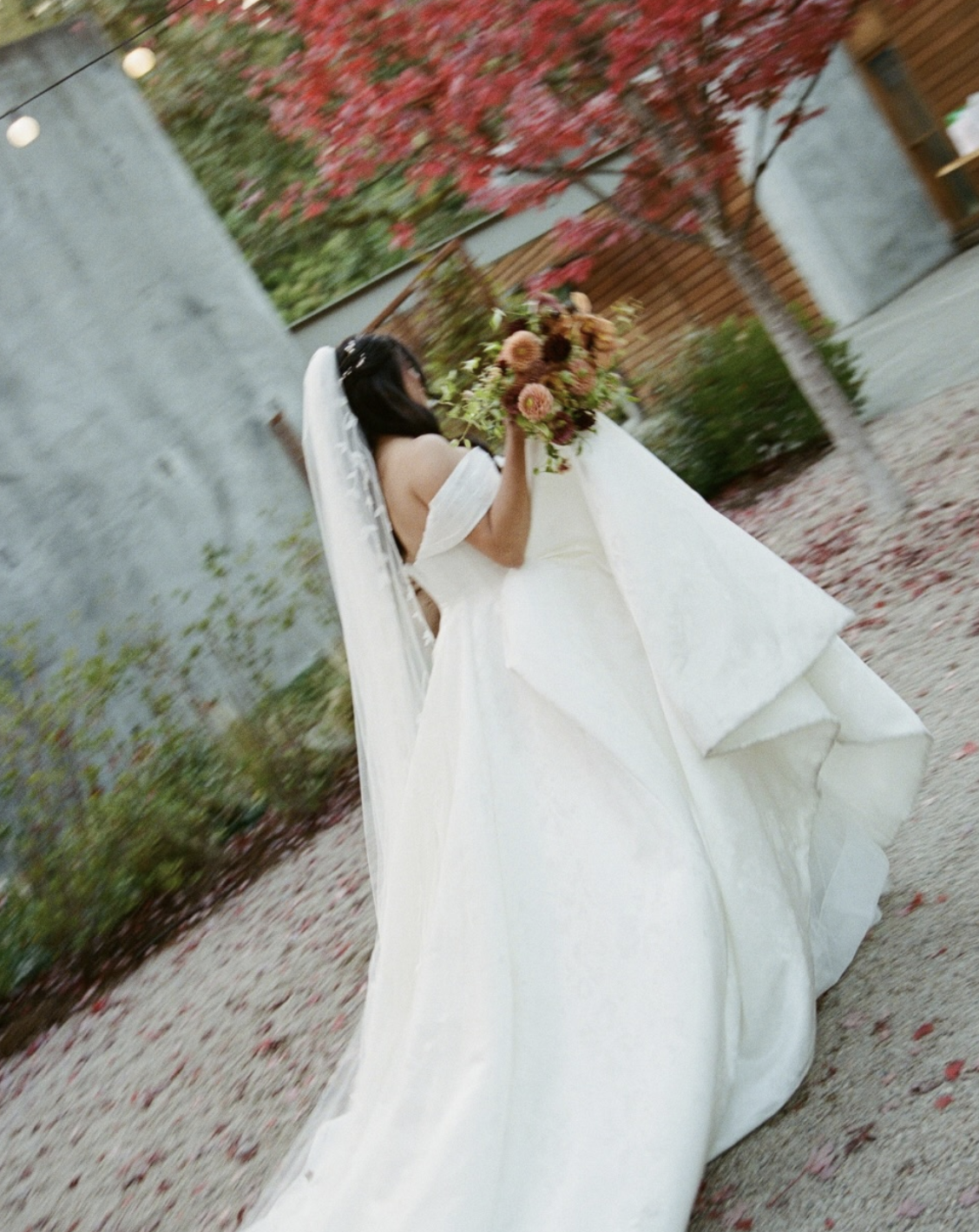
Photo Credit: @ridgewoodfilms
Fall Wedding Flowers Are About More Than Color
One of the most common misconceptions about seasonal wedding flowers is that seasonality is mostly about choosing the "right" colors.
Fall gets orange and burgundy. Spring gets pastels. Summer gets bright colors. Winter gets white and green.
Real seasons are much more interesting than that.
Walk outside in early October and you won’t find a perfectly coordinated palette. You’ll see green leaves beside changing ones, dried grasses next to late-blooming flowers, deep berries, faded seed heads, warm earth tones, and unexpected flashes of color.
That complexity is exactly what can make fall wedding floral design so beautiful.
Fall Is a Feeling, Not a Formula
Instead of asking which colors make flowers look autumnal, we like to think about what makes the season itself feel different.
There’s warmth to fall, but also a little wildness. Landscapes become more textural as grasses dry and foliage begins to change. The light gets softer, evenings arrive earlier, and celebrations naturally start to feel more intimate.
Wedding flowers can reflect those changes without becoming overly literal.
A cream and blush arrangement might feel distinctly autumnal when layered with chocolate cosmos, textural foliage, berries, or wispy grasses. Soft blue flowers can become richer beside warm brown accents, while butter yellow takes on a completely different personality when paired with plum or muted mauve.
You don’t need to announce the season through color.
You can let the flowers quietly respond to it.
Unexpected Fall Wedding Color Palettes
If orange and burgundy aren't your thing, you have plenty of options.
Some of our favorite fall wedding color palettes borrow from the quieter parts of the season rather than the most obvious ones. Think muted pinks beside chocolate brown, butter yellow with soft cream, pale lavender grounded by plum, or dusty blue paired with warm neutrals.
Even an almost entirely white floral palette can work beautifully for an autumn wedding.
The difference often comes down to what surrounds those colors.
Soft Pink and Chocolate Brown
Pink doesn't stop working when summer ends.
In fact, pairing blush, dusty rose, or muted mauve with deeper brown tones can make pink feel richer and more grounded for fall. Chocolate cosmos, dark foliage, warm vessels, linens, or small accents of burgundy can bring depth without overpowering the softness of the palette.
The result still feels romantic, just with a little more weight.
Butter Yellow, Cream, and Warm Neutrals
Yellow can be surprisingly beautiful for fall wedding flowers, especially when you move away from bright lemon tones and toward butter, ochre, honey, and golden shades.
Mixed with cream, beige, soft brown, and plenty of natural texture, yellow takes on a warm glow that feels perfect in autumn light.
This palette works especially well for couples who want their wedding to feel cheerful and seasonal without leaning into darker fall colors.
Plum, Lavender, and Dusty Blue
Cool colors can absolutely belong in fall.
The trick is giving them enough depth.
Pale lavender and dusty blue become more grounded when paired with plum, fig, muted green, or small touches of burgundy. Those deeper tones anchor the softer colors while keeping the overall floral design interesting and unexpected.
For a fall wedding that feels romantic without being overly warm, this can be a beautiful direction.
Ivory, Green, and Natural Texture
Neutral fall wedding flowers don't have to feel stark.
Cream, ivory, soft white, and green can become incredibly seasonal when the design incorporates textural foliage, branches, grasses, berries, and other natural materials.
Instead of relying on color to communicate fall, the arrangement gets its character from shape and movement.
That brings us to one of our favorite ways to design for the season.
Texture Can Make Wedding Flowers Feel Like Fall
Color gets most of the attention when couples begin planning wedding flowers, but texture can completely change the way an arrangement feels.
Fall gives us so much to work with.
Grasses bring softness and movement. Berries add small moments of color and dimension, while branches create shape and scale. Seed heads, pods, fruit, foliage, and flowers at different stages of bloom can make arrangements feel layered and connected to the landscape.
These ingredients don't have to dominate the design.
Sometimes a few carefully chosen seasonal elements are all it takes.
Think Beyond Traditional Flowers
Not every element in a floral arrangement needs to be a flower.
This is especially true in autumn.
Branches can create an incredible ceremony installation without requiring an enormous number of blooms. Small fruits tucked into tablescapes can add color and texture, while trailing vines or grasses soften the edges of an arrangement.
Even changing foliage can become a major part of the floral palette.
Using these seasonal materials makes fall wedding flowers feel less like décor placed into a room and more like an extension of the world outside.
Light Fall Wedding Flowers Can Still Feel Seasonal
We hear versions of this concern often: I love soft colors, but I'm getting married in October. Will they feel wrong?
Not at all.
You don't need to abandon the colors you love because of the date on the calendar.
A pale floral palette can feel incredibly beautiful in fall when it's paired with the right textures and supporting tones. Blush might be grounded with warm brown. Ivory can sit beside golden grasses, while pale blue becomes richer against muted foliage.
Rather than changing the entire palette, we can introduce subtle seasonal cues.
You Don't Have to Choose Between Your Style and the Season
Your wedding should still look like you.
If you've always loved soft, airy flowers, choosing a dark burgundy palette simply because you're getting married in October probably won't make the celebration feel more personal.
The season should influence the design, not dictate it.
That's one of the reasons custom wedding floral design matters. We can look at the colors you're naturally drawn to and ask how they might shift slightly for your venue, season, and setting.
Sometimes that means adding depth, or it's introducing more texture.
Other times, the original palette already works beautifully exactly as it is.
Your Wedding Venue Already Brings Fall Into the Design
Before adding seasonal colors to your flowers, look around.
If you're getting married somewhere surrounded by changing trees, golden grasses, mountains, or open landscape, fall is already present.
You don't necessarily need to repeat every color you see outside.
In fact, allowing the wedding flowers to contrast with the landscape can sometimes make both more beautiful.
Soft cream arrangements can stand out against changing foliage, while muted pinks bring an unexpected softness to a golden landscape. A colorful palette might echo only one or two tones from the surroundings rather than matching everything around it.
Let the Landscape Do Some of the Work
Outdoor ceremonies are a perfect example.
If your ceremony backdrop already includes acres of yellow aspens or dramatic autumn foliage, adding an enormous amount of orange and yellow flowers may not be necessary. A more restrained floral palette can frame the view without competing with it.
Indoors, you might take the opposite approach.
Bringing branches, foliage, grasses, and other seasonal textures inside can create a visual connection to the landscape guests just experienced outdoors.
Your venue gives you clues.
Good floral design pays attention to them.
Early Fall and Late Fall Don't Look the Same
Another reason we don't love treating "fall flowers" as one fixed category is that the season changes quickly.
A September wedding can still feel lush and almost summery. Gardens may be full, foliage can remain green, and the light often carries the warmth of late summer.
By late October or November, the landscape tells a different story.
Colors deepen. Leaves fall, branches become more visible, grasses dry, and the overall environment becomes quieter and more textural.
Your wedding flowers can respond to the specific moment you're getting married rather than a generic idea of fall.
Design for Your Date, Not Just the Season
Instead of saying, "We're having a fall wedding," think about what your particular part of fall looks like.
What will be growing?
What will the landscape surrounding your venue look like?
How early will the sun set?
Will your reception happen mostly in daylight, or will candlelight become part of the experience almost immediately?
Those details can influence floral design just as much as your color palette.
A September wedding may invite abundant late-summer flowers alongside the first touches of autumn texture. Several weeks later, branches, berries, grasses, and richer colors might naturally play a larger role.
Both are fall weddings.
They don't need to look alike.
Choose Fall Wedding Flowers That Feel Like You
There isn't one correct way to design fall wedding flowers.
You can embrace burgundy and orange completely. You can choose pink, yellow, blue, purple, or white. Your arrangements can be lush and romantic, sculptural and modern, loose and garden-inspired, or somewhere in between.
What matters is that the floral design feels connected to your celebration.
At Moonflower Design Co., we look at the whole picture: your venue, wedding date, landscape, personal style, color palette, and the atmosphere you want to create. Seasonality becomes one layer of that story rather than a set of rules we have to follow.
Because a fall wedding doesn't need pumpkins, rust-colored everything, or a bouquet that matches the leaves outside.
It just needs to feel like it belongs in that moment.
And most importantly, it should still feel like you.