

Your Wedding Venue Is Part of the Floral Design
Choosing a wedding venue is often treated as one decision and choosing your wedding flowers as another. First, you find the place. Later, you choose the colors, flowers, centerpieces, and installations that will fill it.
However, the most thoughtful wedding floral design doesn't really work that way.
Your venue isn't simply the backdrop for your flowers. It's one of the most important elements of the design itself. The architecture, landscape, natural light, scale, colors, textures, and even the way guests move through the property all influence how your flowers should look and where they'll have the greatest impact.
A sweeping floral installation can feel perfectly at home in one venue and completely out of proportion in another. Delicate arrangements that feel intimate around a candlelit dinner table may disappear inside a soaring ballroom, while a ceremony surrounded by mountains or mature gardens may need far less floral intervention than an empty indoor space.
That's why choosing wedding flowers for your venue isn't about finding arrangements you love and figuring out where to put them. It's about creating a floral design that feels as though it belongs there.
When the venue and the flowers are designed in conversation with one another, the entire wedding feels more cohesive, intentional, and personal.
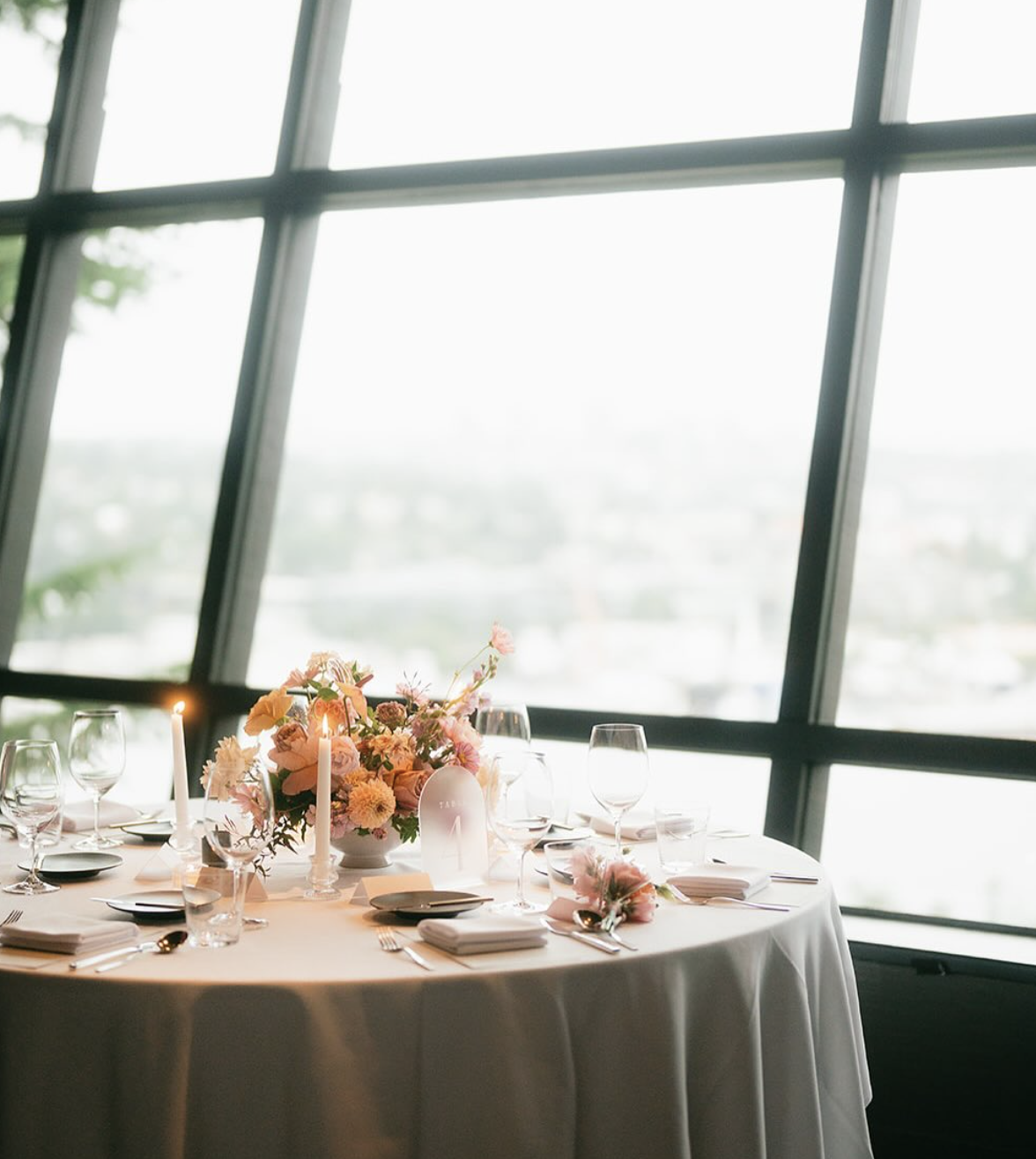
Image from Astrini Sie Studio
Your Wedding Venue Is More Than a Backdrop
Before a single flower is selected, your wedding venue has already established much of the visual language for the day.
A historic estate brings architecture, texture, and character of its own. An outdoor wedding may already be surrounded by trees, wild grasses, mountains, or gardens. Modern venues often offer clean lines and open spaces, while intimate restaurants or private homes create an entirely different sense of scale.
Each setting gives your florist something to respond to.
Rather than thinking about how to transform the venue into something completely different, thoughtful wedding venue floral design considers what already makes the space beautiful and builds from there.
Sometimes that means bringing softness to hard architectural lines. Elsewhere, flowers may echo the landscape just beyond the ceremony. In a venue filled with ornate details, restraint may allow both the architecture and floral design to breathe.
The goal isn't to make every venue look the same.
It's to understand what the space is already saying and design flowers that become part of that conversation.
Work With the Space, Not Against It
One of the easiest ways for wedding flowers to feel disconnected is when the floral vision ignores the venue itself.
You might fall in love with a photograph of a dramatic ceremony arch against a blank wall, but your venue could already have an incredible stone fireplace, mature tree, architectural doorway, or mountain view that naturally creates a focal point. Covering it simply because an inspiration image featured something different can mean overlooking one of the most beautiful elements you already have.
Working with the venue doesn't mean the design needs to be minimal or understated. Large-scale wedding floral installations can still be transformative. The difference is that they're created in response to the space rather than placed into it without context.
The architecture becomes part of the composition. Existing colors influence the floral palette, while the landscape helps determine which textures feel natural. Even ceiling height, window placement, and surrounding materials can change how an arrangement is perceived.
Instead of asking, "Where can we put flowers?" a more interesting question is, "Where will flowers change the way this space feels?"
That shift can completely transform the design process.
Let the Architecture Guide the Wedding Floral Design
Every wedding venue has visual anchors.
There may be an incredible staircase guests encounter when they arrive, a fireplace behind the head table, exposed beams overhead, an arched doorway leading into the ceremony, or windows that frame the landscape outside.
Those features aren't obstacles your florist has to design around. They can become some of the strongest opportunities within the entire floral plan.
Wedding flowers have the ability to soften architecture, emphasize it, frame it, or intentionally contrast with it. An organic floral installation climbing across stone can highlight the texture of the building rather than hiding it. Branching arrangements beneath tall ceilings can help connect the room vertically, while lower designs may allow an already dramatic view to remain completely uninterrupted.
The strongest floral designs don't compete for attention with the venue.
They help you notice it differently.
Scale Changes Everything
Scale is one of the reasons wedding floral inspiration can't simply be copied from one venue to another.
An arrangement photographed on a small sweetheart table can appear substantial in an image but feel surprisingly small when placed on a twenty-foot head table. Tall centerpieces may create drama in a ballroom with soaring ceilings, yet the same designs could overwhelm an intimate reception space and make conversation difficult.
Even ceremony flowers are affected by scale. A floral meadow that beautifully frames two people in a garden may need additional height or visual weight when placed in front of expansive mountain scenery.
This is where professional wedding floral design becomes about much more than selecting flowers.
Proportion matters. Negative space matters. Sightlines matter. Your florist is considering how the design will be experienced from across the room as well as from a seat at the table.
Sometimes a space needs more.
Just as often, it needs less.
Knowing the difference is part of what makes a floral design feel intentional.
Your Venue's Existing Colors Matter
Wedding color palettes are often created in isolation.
Couples choose a collection of colors they love, then begin applying those colors to flowers, linens, stationery, attire, and décor. Yet your venue already has a color palette of its own, whether you intentionally chose one or not.
Wood tones, stone, flooring, wall colors, upholstery, landscaping, and architectural finishes all become part of the final visual story.
Thoughtful wedding flowers don't need to perfectly match those elements, but they should acknowledge them.
A warm interior filled with natural wood may invite an entirely different floral palette than a bright modern space with white walls and concrete floors. Outdoor venues change throughout the seasons, bringing spring greens, summer warmth, autumn foliage, or the quieter tones of winter into the design.
Considering those existing colors early allows the floral palette to feel integrated rather than layered on top of the venue.
Look Beyond the Walls
The setting outside the venue matters, too.
If your ceremony overlooks a mountain range, sits beneath old trees, or takes place beside a garden already overflowing with seasonal color, those surroundings are part of your wedding design whether you add a single flower or not.
Rather than competing with that natural beauty, florals can create a visual connection between the celebration and the landscape around it.
Locally inspired textures, seasonal flowers, branches, foliage, and organic shapes can make an outdoor wedding feel rooted in its surroundings. Indoors, those same materials may bring a sense of the landscape into the reception and create continuity as guests move from one space to another.
The result isn't necessarily a wedding that feels "rustic" or "natural."
It's simply a wedding that feels like it belongs exactly where it is.
Natural Light Changes How Wedding Flowers Feel
Light has an enormous influence on floral design, yet it's easy to overlook when gathering wedding flower inspiration online.
A flower photographed in bright afternoon sunlight looks different beneath candlelight. Deep colors can become richer as evening falls, while subtle tonal differences may be more visible in naturally illuminated spaces. Glass, metallic vessels, translucent petals, and textural foliage all interact with light in their own ways.
Your venue's windows, ceremony time, reception lighting, and even the direction of the sun can influence how the floral palette is experienced throughout the day.
Rather than viewing flowers as static décor, an experienced florist considers how the design will change as the celebration unfolds.
Morning becomes afternoon. Golden hour moves into evening, candles are lit, and the room begins to feel different from the one guests entered several hours earlier.
Flowers move through that transition with you.
Design for the Experience, Not Just the Photograph
Of course, your wedding flowers should photograph beautifully.
But your wedding isn't experienced through a photograph.
Guests encounter floral design from every angle. They walk beneath installations, pass arrangements on their way to dinner, sit beside centerpieces, catch the scent of flowers as they enter the ceremony, and experience the way candlelight moves across petals later in the evening.
That's why wedding venue floral design needs to consider far more than a single camera angle.
A ceremony installation should make sense when guests approach it, not just when photographed from directly in front. Reception flowers need to complement conversation rather than obstruct it. Statement pieces should create impact from the places people will actually experience them.
Photography captures the design.
Your guests live inside it.
Not Every Part of Your Venue Needs Flowers
One of the most important parts of intentional wedding design is knowing where not to add something.
Once couples begin planning wedding flowers, there's often pressure to create an arrangement for every possible surface. The welcome sign needs flowers. The aisle needs flowers. The bar needs flowers. Every table needs something. Every doorway suddenly feels like an opportunity.
But filling every available space doesn't necessarily create greater impact.
Sometimes it does the opposite.
When flowers are thoughtfully concentrated in the places that matter most, those moments become more memorable. A breathtaking ceremony installation can command attention because it isn't competing with ten other large floral moments. An abundant head table feels more significant when surrounding tables are intentionally quieter. A dramatic entrance becomes an experience because guests have space to notice it.
Negative space gives floral design room to breathe.
It also allows your venue to remain part of the story.
Decide Where Flowers Will Matter Most
Rather than distributing a floral budget evenly throughout a venue, consider the moments where flowers will have the greatest emotional and visual impact.
Where do guests first arrive?
What will frame your vows?
Where will everyone gather?
Which architectural feature deserves attention?
What part of the reception will naturally become a focal point?
Those questions help transform wedding flowers from a collection of individual arrangements into a cohesive design.
One statement installation may create more impact than several smaller arrangements scattered throughout spaces guests barely notice. Repurposing ceremony flowers at the reception can also extend the life of a significant floral moment while maintaining continuity throughout the day.
Intentional doesn't necessarily mean more flowers.
It means putting the right flowers in the right places.
Your Ceremony and Reception Should Feel Connected
Even when a ceremony and reception happen in completely different areas of a venue, they should feel like chapters of the same story.
That doesn't mean every arrangement needs to match.
In fact, allowing the wedding floral design to evolve throughout the day often creates a much richer experience. Ceremony flowers may feel softer and more connected to the landscape, while reception arrangements introduce deeper colors, candlelight, or additional texture as the celebration becomes more intimate.
The connection comes through repeated floral elements, colors, shapes, and materials rather than identical arrangements.
As guests move from one setting to the next, the design should feel familiar without becoming predictable.
Your venue provides the framework for that transition.
Thoughtful flowers help connect it all.
Seasonal Wedding Flowers Help Ground the Design
Seasonality becomes even more powerful when it's considered alongside the venue.
The landscape surrounding a wedding in May will feel different from that same property in October. Gardens change, trees change, light changes, and the atmosphere of the venue evolves along with them.
Choosing seasonal wedding flowers allows the floral design to participate in that moment rather than feeling disconnected from it.
Spring might invite delicate flowering branches and fresh movement. Summer offers abundance and lush texture, while autumn can bring richer tones, seed heads, grasses, fruit, or foliage into the design. Winter has its own quiet beauty, creating opportunities for sculptural branches, evergreens, textural elements, and unexpected seasonal materials.
Designing with the season doesn't mean limiting your vision.
It gives the vision context.
Let the Venue Tell You What It Needs
Sometimes the most valuable part of wedding planning is leaving room for the design to evolve.
You may arrive with a Pinterest board filled with specific arrangements, but walking through the venue with your florist can reveal opportunities you hadn't considered. A staircase suddenly becomes the perfect floral moment. An outdoor ceremony may need far fewer flowers because the landscape is already doing so much of the work. A blank wall that seemed unimportant during the venue tour may become the natural focal point once the reception layout is finalized.
That's why wedding floral design is a process rather than a shopping list.
The venue gives us information, and the season gives us materials.
Your story gives us direction.
From there, the design begins to take shape.
Wedding Flowers Should Feel Like They Belong
The most successful wedding floral design doesn't make you think about how many arrangements were ordered or how closely they matched an inspiration photo.
Instead, everything simply feels right.
The flowers make sense against the architecture. Their scale feels appropriate for the room, while the colors interact naturally with the surroundings. Statement moments appear exactly where they're needed, and quieter spaces are allowed to remain quiet. As guests move from the ceremony into cocktail hour and eventually the reception, each floral detail feels connected to the experience as a whole.
That's what happens when your wedding venue becomes part of the floral design rather than simply the place where the flowers are delivered.
At Moonflower Design Co., we approach wedding flowers by looking at the entire celebration. Your venue, season, surroundings, personal style, and the way you want your wedding to feel all become part of the creative process. From intimate floral details to large-scale installations, every element is designed to belong within the space and contribute to the experience you're creating.
If you're beginning to plan your wedding flowers, start with the place you've chosen to celebrate.
Then let the design grow from there.