
How to Design Wedding Florals That Photograph Beautifully
From a florist’s eye, we are explaining everything you need to know about designing wedding florals that photograph beautifully.
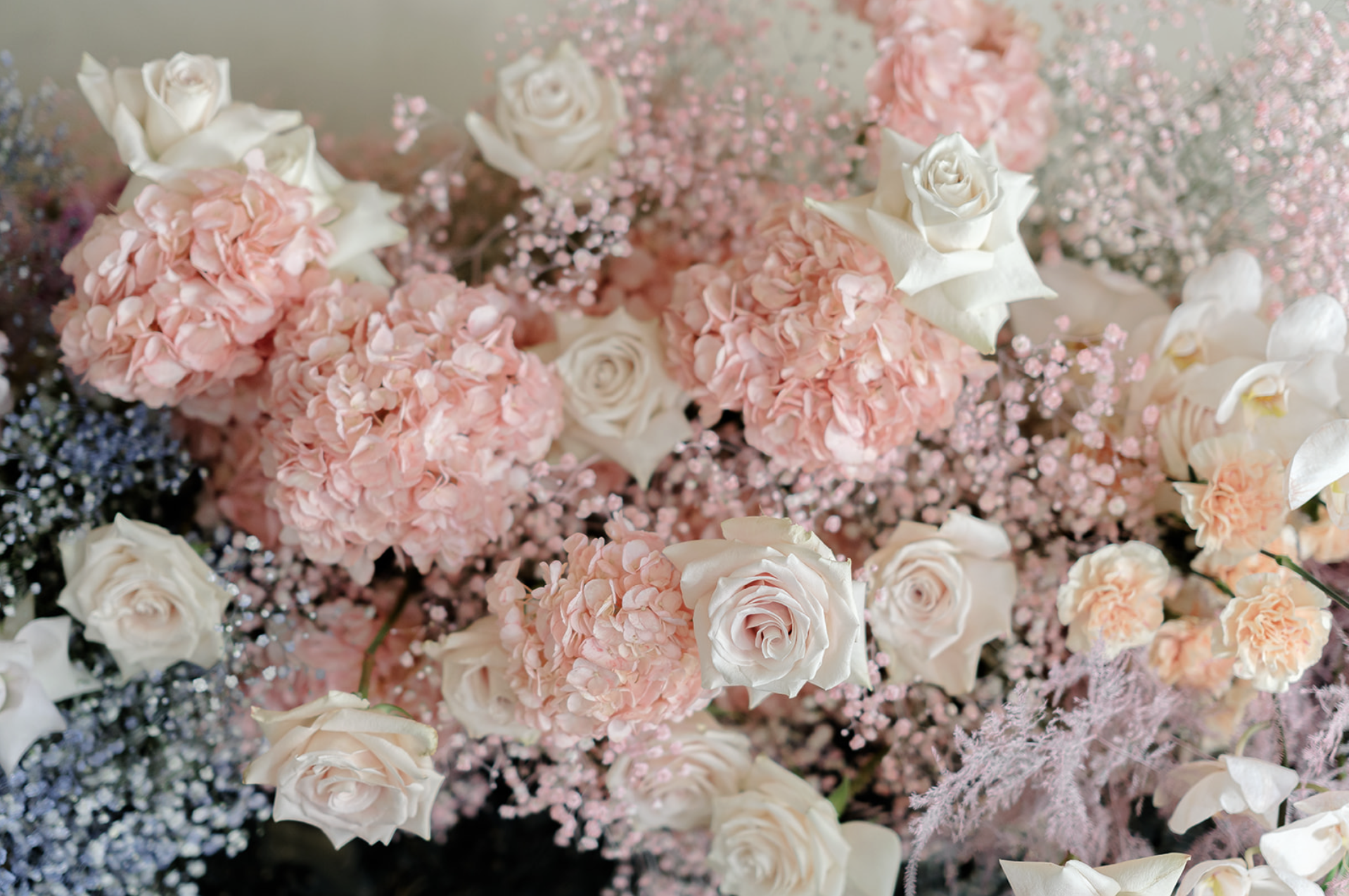
Your wedding photos will outlive your wedding day.
Long after the final toast, the last dance, and the quiet drive home at the end of the night, your images will hold the atmosphere of your celebration. They will carry the light, the color, the movement, and the emotion of each moment. While many couples choose flowers simply for how they look in real life, the truth is that wedding florals play a powerful role in how your day is visually remembered through photography.
At Moonflower, we design with both presence and permanence in mind.
Every arrangement is created to feel beautiful in real time and to translate with depth and intention through the lens. From scale and color to movement and placement, here is how to thoughtfully choose wedding florals that photograph beautifully.
Why Wedding Florals Matter for Photography
Florals do far more than decorate a space.
They quietly shape the visual story of your wedding and influence how your memories are preserved. The flowers you choose become the backdrop of your vows, the softness in your portraits, the texture behind laughter at the reception, and the framing for so many intimate moments you may not even notice in real time.
Your florals naturally become part of:
The frame around your ceremony
The foreground and background of portraits
The emotional tone of the reception
The atmosphere of quiet in-between moments
Every photograph is influenced by what exists in the background, the foreground, and the light between. When florals are chosen with intention, they elevate each image without ever pulling focus.
Choosing the Right Scale for Wedding Florals in Photos
Scale is one of the most important and most overlooked elements of wedding floral design. It determines how your florals interact with the space around them and how balanced your photos feel.
Large-Scale Wedding Florals for Visual Impact
Expansive floral installations create immediate depth and drama in wide-angle photographs.
These larger designs help ground open landscapes and spacious venues so they feel complete and visually anchored. Without sufficient scale, even the most beautiful outdoor setting can feel unfinished in photos.
Large-scale florals work especially well for:
Outdoor ceremonies
Mountain and desert locations
Grand indoor venues with high ceilings
Large guest counts that need visual balance
Intimate Floral Designs for Soft and Editorial Imagery
Smaller, refined designs shine in elopements, micro-weddings, and intimate indoor spaces. These arrangements allow photographers to capture quiet emotion, subtle hand movement, and soft layers of foreground blur.
Intimate designs are ideal for:
Elopements and destination ceremonies
Indoor chapels and small venues
Sweetheart tables and candlelit dinners
Bridal portraits and flat lays
Both large and small scale designs are powerful when used intentionally. The beauty lies in choosing the scale that best supports the story you want your photographs to tell.
How Floral Color Affects Wedding Photography
Color behaves differently through a camera lens than it does to the naked eye.
The tones you choose do not just influence the mood of your wedding day. They also affect how light moves through your images and how skin tones, fabrics, and natural surroundings appear in your gallery.
How Wedding Flower Colors Affect Skin Tones and Lighting
Soft neutrals, warm earth tones, and muted pastels photograph beautifully in nearly every lighting condition. They complement:
Natural sunlight
Golden hour
Shaded areas
Indoor ambient lighting
Highly saturated colors can be stunning when used thoughtfully, but they reflect much more aggressively and can cast color onto skin, dresses, and nearby surfaces.
This is not a negative when planned correctly, but it does require balance so the image still feels natural.
Creating Contrast with Your Wedding Color Palette
Contrast is what allows your florals to stand out within a photograph. A well-designed color palette often includes:
Anchor neutrals
Transitional mid-tones
Intentional accent colors
This balance creates clear visual separation between your florals, your attire, your linens, and your surroundings so nothing unintentionally blends away in the final images.
Movement in Floral Design and Why It Matters in Photos
Flowers that move create images that feel alive.
Loose, organic floral designs allow stems and petals to shift naturally with wind and human motion. This movement adds softness and depth to ceremony arches, bouquets, aisle florals, and hanging installations. It introduces an effortless quality that feels emotional rather than staged.
Movement-driven floral design enhances:
Outdoor ceremonies with natural wind
Candid walking moments down the aisle
Golden hour portrait sessions
Motion-filled dance floor images
Tighter designs bring structure and formality, but movement adds feeling. Many couples choose a blend of both to create balance in their gallery.
Best Flowers for Long Wedding Days and Outdoor Photography
Not all flowers age the same way across long timelines and changing weather conditions. Some blooms are naturally more resilient and maintain their shape and color hour after hour.
Examples of flowers that photograph well all day include:
Roses
Orchids
Lisianthus
Spray roses
Ranunculus in cooler seasons
More delicate flowers can absolutely be used with intention.
They simply require thoughtful timing, proper hydration, and structural support so they maintain their visual integrity from the first look through the final dance.
Strategic Floral Placement for Wedding Photography
Where your flowers live is just as important as what they look like.
Placement shapes composition and guides the viewer’s eye through each photograph. Even minimal designs feel elevated when positioned thoughtfully within the frame.
Floral placement strongly impacts imagery in areas such as:
Ceremony entrances
Altar or arch structures
Aisles
Sweetheart tables
Dance floor focal points
When florals are placed with photographic intention, they become natural framing tools that enhance every image without ever overpowering it.
Why Your Florist and Photographer Should Work Together
Your florist and photographer share the same ultimate goal of telling your story beautifully.
When these two professionals work together with intention, the results are always stronger. Florals are designed with camera angles in mind. Installations are positioned where light naturally falls. Bouquets are structured for proportion, movement, and texture.
This collaboration creates harmony between design and documentation so your florals look just as beautiful in your photographs as they do in real life.
Designing Wedding Florals That Become Part of Your Legacy
Your wedding florals are not simply decoration. They become part of how your day is remembered. They frame your vows. They soften your quiet moments. They color your celebration. They live on in every image that tells the story of your commitment.
Here, we design with the understanding that your wedding will be remembered primarily through photographs.
Our goal is always to ensure that your florals support your story in a way that feels layered, emotional, and timeless so that when you look back decades from now, you still feel the atmosphere of the day exactly as it was.
INTERESTED IN WORKING TOGETHER?